
What is Platform-as-a-Service
This guide is maintained for Ruk-Com PaaS. Screens and options may vary by platform version and account permissions.
Confirm the environment, region and account permissions, and back up current settings before changing a production system.
Objective
This guide explains how to use What is Platform-as-a-Service on Ruk-Com Cloud PaaS, with ordered procedures and practical verification points.
Before you begin
- Sign in with an account permitted to manage the relevant environment.
- Confirm the target environment, region and resources before saving changes.
- Create a backup or rollback plan before changing a production system.
In this topic, we will understand the word.Platform as a ServiceOr known in short asPaaS
Even today, the definition ofCloud ComputingAnd types of cloud services such as IaaS, PaaS, and SaaS may still cause some confusion for users. But forRuk-Com CloudOur service is considered a formPaaS (Platform as a Service)truly
What is Platform as a Service?
PaaS means services that are providedComplete platform and toolsFor developers (DevOps) and system administrators (SysAdmin) to create and manage applications. Without having to start from scratch or maintain the entire infrastructure yourself.
This service reduces the complexity of work. Support automatic system expansion (Scalable) Support modern technology And there are various basic settings ready to use immediately, such as:
Database Cluster
Load Balancer
Container Technology
Docker / Kubernetes
CI/CD management systems and more
The Platform as a Service overview is divided into 3 main perspectives:
- wp:list-item
- purpose /wp:list-item wp:list-item
- abstraction (abstraction) /wp:list-item wp:list-item
- Functionality (functionality) /wp:list-item
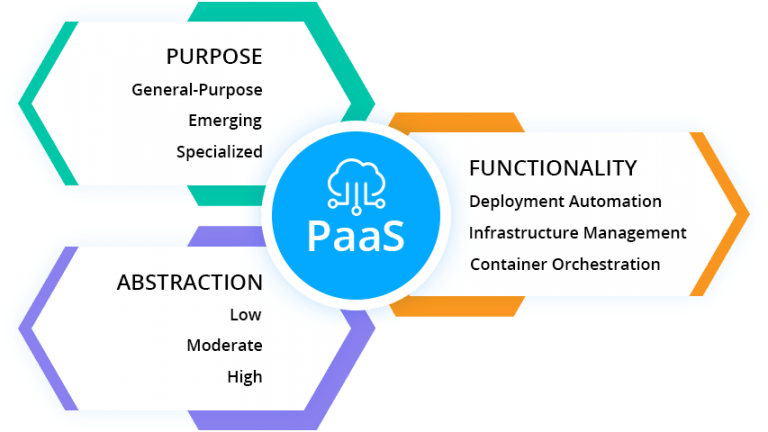
Objectives of PaaS providers
Today, Platform as a Service (PaaS) providers are often introducing new solutions. For application development and cloud hosting Emphasis is placed on providing tools designed to support specific applications. It enables fast and efficient application development and deployment.
If looking at the overall picture We can classify PaaS services into three main categories:
1. General-purpose PaaS – for general application development
This type of platform is suitable for managing general applications, bothStatefulandN-Tier ArchitectureIt can support processing with large workloads. and scale up or down resources as needed with modern technologies such as autoscaling and container orchestration.
Supports applications likeStateless,Cloud-native, andMicroservicesin full It also greatly reduces the burden on human resources to maintain the infrastructure.
2. Emerging PaaS – for new technologies and services
This group of platforms focuses on supporting innovation or emerging technology. They are often designed for specialized tasks or next-generation applications, such as:
- wp:list-item
- Model processingServerless /wp:list-item wp:list-item
- Model systemDistributed processing /wp:list-item wp:list-item
- UsageMachine Learning / AI /wp:list-item wp:list-item
- Edge Computing or Event-driven Architecture /wp:list-item
These Emerging PaaS often offer new application development models. that is flexible and adapts quickly to technology market trends
3. Specialized PaaS – for specific tasks or specific industries
It is a platform developed to support highly specialized tasks in the market such as:
- wp:list-item
- systemReady-made E-commerce /wp:list-item wp:list-item
- ProcessingBig Datato analyze business data /wp:list-item wp:list-item
- Content management system (CMSaaS) /wp:list-item wp:list-item
- Managed database service (DBaaS) /wp:list-item wp:list-item
- Business process automation (BPaaS) /wp:list-item wp:list-item
- Safety systems such asFirewall as a Service /wp:list-item
These platforms are often further sub-grouped according to the nature of their services to perfectly meet each industry or specific need.
abstraction (Abstraction)
Solution ofPlatform as a Service (PaaS)Nowadays, we begin to attach great importance toManage the system automaticallyFrom the process of deploying the application to the processCI/CD(Continuous Integration / Continuous Delivery) completely
The concept of “abstraction” here is where a platform hides behind the complexity of its infrastructure. This eliminates the need for users to deal with low-level details such as:
- wp:list-item
- Setting up server or storage (Server / Storage) /wp:list-item wp:list-item
- System security management /wp:list-item wp:list-item
- SettingsAuto ScalingFor adding-reducing resources automatically /wp:list-item wp:list-item
- doingLoad Balancingto distribute the usage load /wp:list-item wp:list-item
- Automatic update and system monitoring /wp:list-item
This reduces the workload of developers and administrators. (DevOps/SysAdmin) is greatly reduced in terms of maintaining infrastructure and reducing the chance of errors from manual setup.
Functionality (Functionality)
In order to develop and manage applications efficiently.PaaSMust have main functions that cover bothDeployment,Infrastructure, andContainer ManagementAs follows:
- wp:list-item
- Deployment Automationwp:list wp:list-item
- PaaS should have tools forDeploy and manage applications automaticallyEasy to use and not complicated so that users can get started quickly Examples of features that should be included include: /wp:list-item wp:list-item
- systemOne-Click Auto Install /wp:list-item wp:list-item
- Deploying with commandgit push /wp:list-item wp:list-item
- Basic advance settings (Pre-configuration) /wp:list-item wp:list-item
- systemCI/CD /wp:list-item wp:list-item
- Integrated project management tool /wp:list-item wp:list-item
- These functions reduce learning time and allow developers to focus on writing code.
- Infrastructure Management
In addition to the application aspect, PaaS must also have the ability to maintain and manage.Background Infrastructureconveniently To give users control over their own resources, such as:wp:list wp:list-item - systemMonitoringandHealth Check /wp:list-item wp:list-item
- Security tools (Security Management) /wp:list-item wp:list-item
- Performance monitoring (Performance Check) /wp:list-item wp:list-item
- Controlling usage costs (Cost Control) /wp:list-item wp:list-item
- system forUpgradeor maintenance (Maintenance) easily
These allow users to efficiently administer the system without needing to be an infrastructure expert.
/wp:list-item
/wp:list
/wp:list-item
wp:list-item
- Container Orchestration
ManagementContainerThis is another important challenge of PaaS that must answer the questions of:wp:list wp:list-item - Deployment speed /wp:list-item wp:list-item
- System security /wp:list-item wp:list-item
- Availability at all times (High Availability) /wp:list-item wp:list-item
- A good PaaS should have a container management system that can: /wp:list-item wp:list-item
- Verify and recover (Self-Healing)Container that has problems automatically /wp:list-item wp:list-item
- Supports system expansion (Auto Scaling) immediately when necessary
Tools like Kubernetes or a fully integrated container system are essential elements that help make container management smooth and flexible.
/wp:list-item
/wp:list
/wp:list-item
Choosing to use PaaS
Guidelines for considering the selection of PaaS services for organizations if your organization is considering using the services.Platform as a Service (PaaS)The teamRuk-Com CloudWe recommend guidelines for evaluation and decision-making as follows:
Verify that the chosen PaaS can support your existing systems or technologies, such as databases, frameworks, or DevOps tools, to ensure a smooth migration or onboarding.
Make sure that the programming language your team is using such as PHP, Node.js, Python, Java, etc.It can be run on the platform without any limitations.
considerFuture development planBoth in terms of language that will be used additionally. and software stack changes, such as moving from monolith to microservices or from VM to container-based deployment.
Choose a PaaS that uses open standards or can be easily ported. In order not to be limited to any one service provider.
The system should be open to users and can be managed via UI or API, whether it be building/scaling/monitoring the system status. For true flexibility and control
In addition to the monthly price Should be consideredHidden costsSuch as additional service fees, storage, traffic or maintenance fees that may occur when the system expands.
A good service should have a support team that is ready to answer questions, give advice, and help solve problems quickly. Especially during important times or disruptions
If you are interested in using PaaS that is flexible, secure, and ready to use at the enterprise level, the Ruk-Com Cloud team is happy to provide advice and help plan a system to suit your needs.