
How to create PostgreSQL and connect to pgAdmin
This guide is maintained for Ruk-Com PaaS. Screens and options may vary by platform version and account permissions.
Confirm the environment, region and account permissions, and back up current settings before changing a production system.
Objective
This guide explains how to use How to create PostgreSQL and connect to pgAdmin on Ruk-Com Cloud PaaS, with ordered procedures and practical verification points.
Before you begin
- Sign in with an account permitted to manage the relevant environment.
- Confirm the target environment, region and resources before saving changes.
- Create a backup or rollback plan before changing a production system.
You can manage the database. Without logging in to the Ruk-Com Cloud dashboard, here's how to create and use it.
Creating the Environment
The database management screen can be accessed via public IP or Ruk-Com Endpoints (no public IP required). Let's take a look at both options for creating a database environment.
Environment method with public IP
1. Log in to Ruk-Com Cloud.
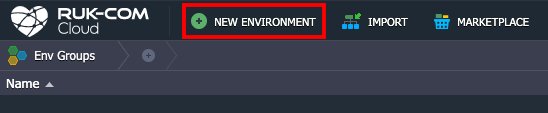
2. Click the buttonNew Environmentat the top left of the dashboard.
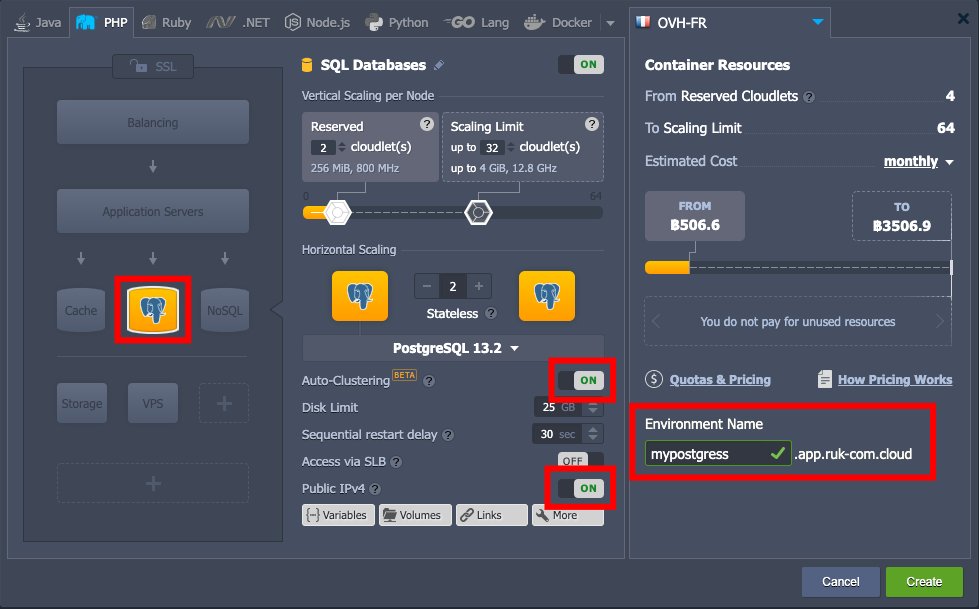
3. InEnvironment Topology wizardSelect PostgreSQL as the database you want to use. In case you want to use a database cluster, just flip the switch. Auto-Clustering to the right to ON, then add Public IPv4 by sliding the switch to the right as well. After that, enter the name of the Environment, for example mypostgres, and click the Create button.
It may take some time to create the environment.
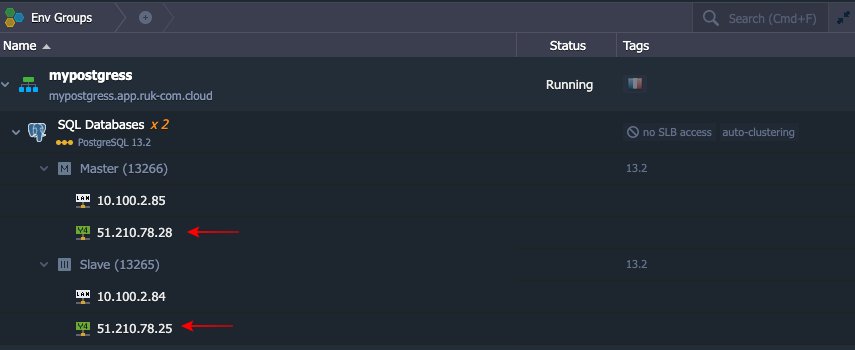
Both nodes will have public IPs.
How to create an environment without using a public IP
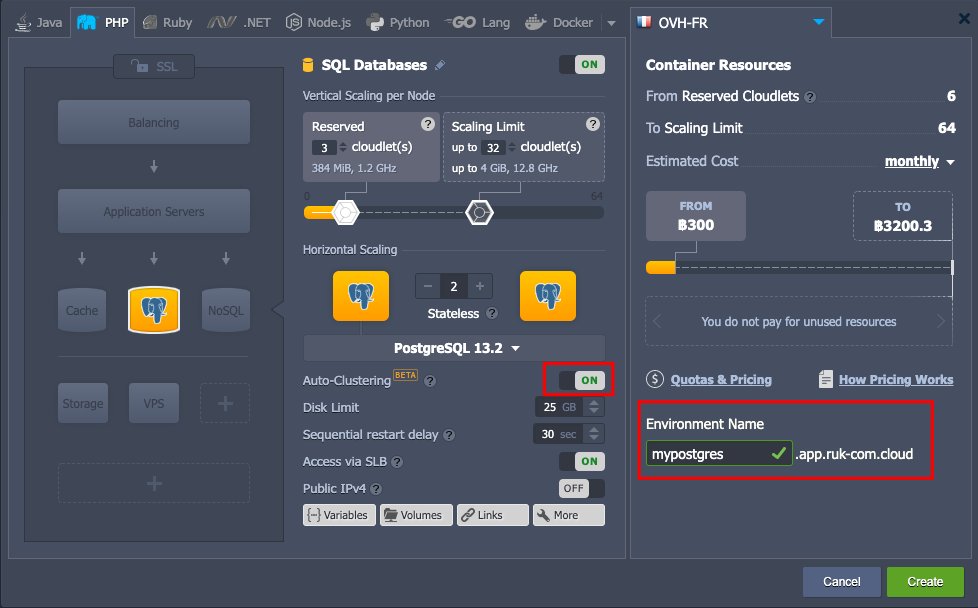
1. The construction method is the same as above. But you don't need to switch the Public IP switch to ON.
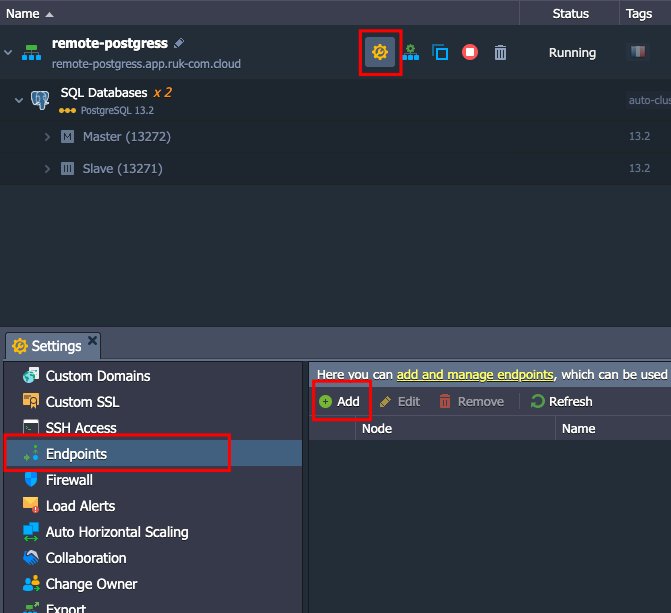
2. When the Environment is ready, go to Settings. Then click on the Endpoints tab and click Add to create a new port mapping.
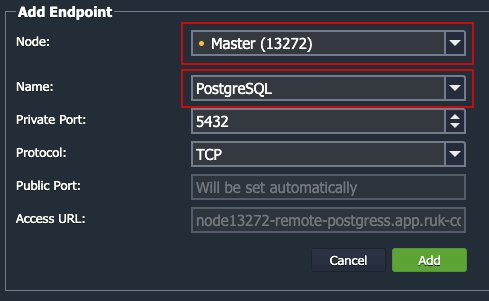
3. Select the Node you want to access and Name as PostgreSQL. The remaining parameters Private Port, Protocol, Public Port, and Access URL are automatically generated.
4. The completed port mapping to the database master node will look like this.

If it is necessary to use both Master and Slave, do the same.
Remote access to PostgreSQL on the cloud
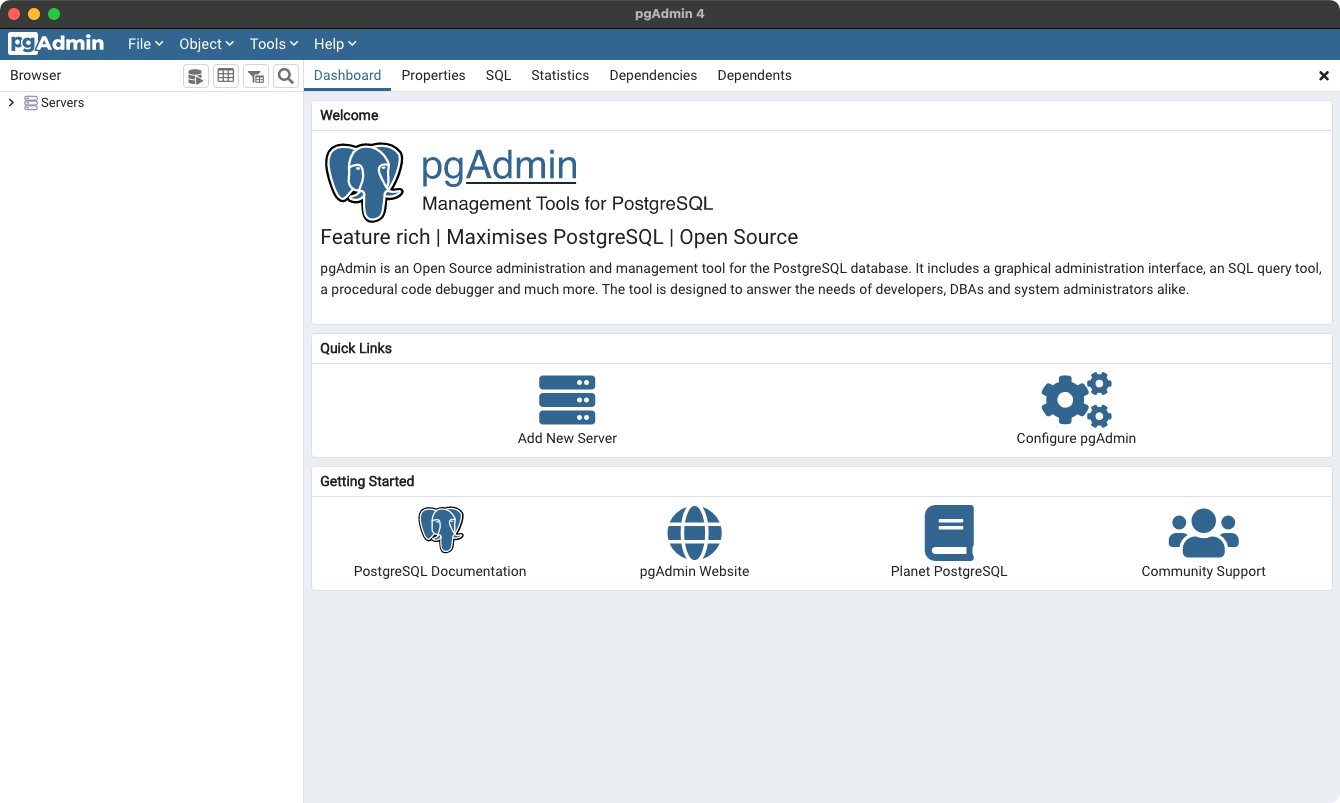
1. If you have a database cluster, it is more convenient to manage all the servers in the cluster.
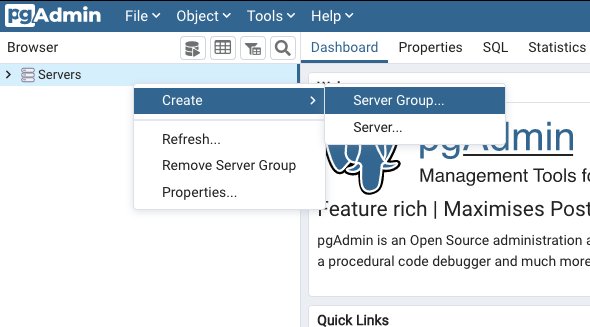
2. Then enter a group name, such as Remote Postgres.
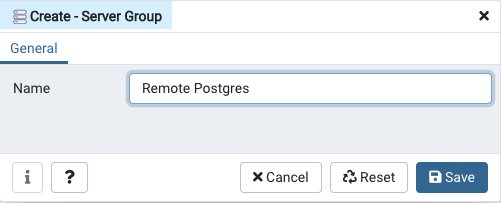
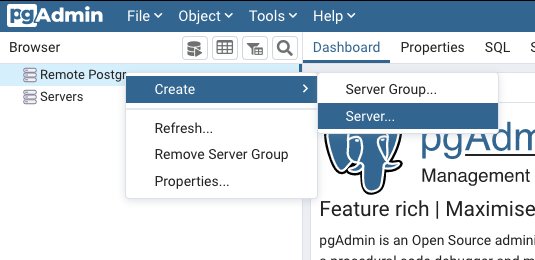
3. After that, add all database servers to the group one by one. Let's see if there is a way to do it. How can I find the main database? Right-click the group (e.g. remotepostgres) and select Create > Server.
4. Enter a server name (such as Master for your cluster's main database) on the General tab.
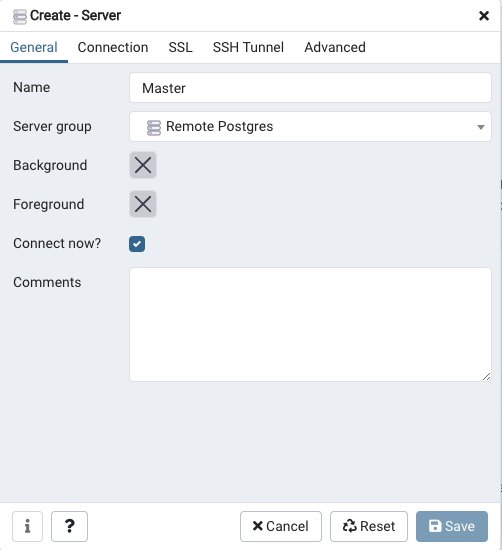
5. In this step you need to specify server access settings depending on whether you created the database with or without public IP as described above.
Connecting via Public IP
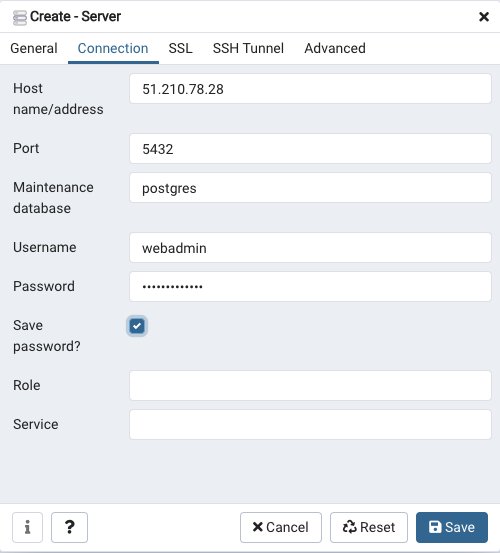
Go to the Connection tab and enter the public IP of your main database in the Host name/address field. Enter the Username and Password that you received while creating the email database environment.
Connecting through Endpoints
Use the URL and Public Port from the generated port mapping. and set up the database server connection. Username and password are the same as described above.
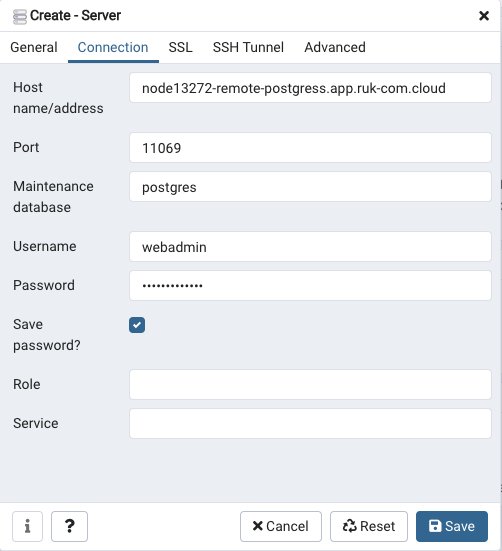
You may change other specific options if you are more confident in your actions. Finally, pressSaveto change and you will see that the connection was successfully established.
For our example, both the master database and slave database are shown as follows.
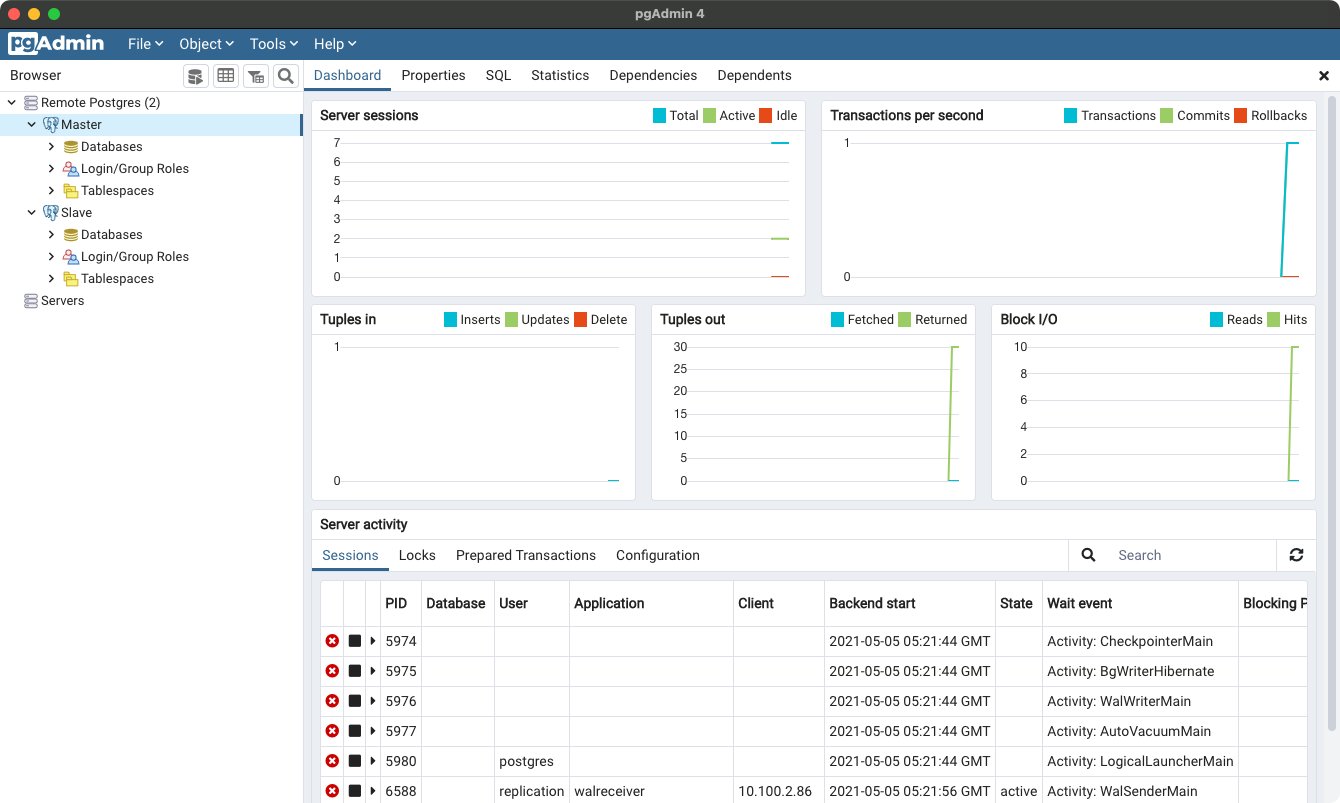
PostgreSQL can now be used remotely in the cloud.