
EASM + Threat Intel
Discover → verify → prioritize
Understand exposure
EASM and threat intelligence reveal assets, credential leaks, lookalike domains and relevant vulnerabilities.
Ruk-Com Blue connects exposure discovery, protection and SOC response, with a service scope shaped around your critical systems and team.
Choose protection layers around your systems, risks and team readiness.
EASM and threat intelligence reveal assets, credential leaks, lookalike domains and relevant vulnerabilities.
Identity, firewall, WAF and EDR apply policies and send logs and alerts for investigation.
SOC analysts use playbooks and SOAR within approved authority and verify outcomes.
EASM provides exposure context; it is not a traffic gateway or blocker. Tool connections depend on supported integrations and service scope.
AI can accelerate parts of an attack. Identities, systems and data remain key targets.
Services · Systems · Data
Figures are from the 2026 internal Ruk-Com Blue Team data used in the presentation. Requests are not attackers or successful breaches; AI usage is not separated. WordPress is a cumulative count that may include remediated sites; the source gives no cutoff date or deduplication method. These are not live metrics.
Leaked passwords, secrets or sessions may grant access within their permissions. Check MFA, account status and sessions together.
Check affected versions, configuration and access conditions. A CVE reference alone is not evidence of compromise.
Reduce exposure while awaiting a patch with least privilege, segmentation and behavioral detection, considering the impact on operations.
After gaining access, an intruder may act in several ways. Reach depends on permissions and connectivity.
A backdoor or web shell may survive patching. Inspect files, accounts and permissions as well.
Access can spread through permissions and connections. Segmentation helps limit reach.
Files or screenshots can be collected from accessible systems while services keep running.
Confirm export results, application audit and network egress before concluding data left the system.
An explanatory scenario, not a fixed sequence or a customer incident.
Ransomware or containment shutdowns can interrupt sales and services and add recovery costs.
Encryption and data leakage are different impacts. Data may be stolen before it is encrypted.
Restoring systems does not erase business damage. Paying a ransom does not guarantee data recovery.
Connect each finding to a system and an owner, then prioritize what needs investigation or remediation.
Monitor exposed credentials, data and code from authorized sources. Verify relevance without testing leaked logins.
Track lookalike domains, phishing sites and impersonation, then verify the evidence.
Discover internet-facing assets, shadow IT and CVEs that may affect your environment.
Add threat context and indicators to prioritize risk. Intelligence alone does not confirm compromise.
Gather relevant assets, domains and exposure signals.
Confirm owners and business impact; use AI summaries where supported.
Verify evidence and perform authorized VA or pentesting when needed.
Assign owners, act within scope and recheck the result.
Separate investigation data from actions that affect systems, with clear accountability.
Collect logs and correlate context
Analysts verify evidence and impact
Execute playbooks within approval limits
↳ Verify the result → report to SOC → review and improve
AI helps summarize and correlate; people verify and decide. Alerts do not automatically change code or deploy it. Testing requires approved scope, timing and stop conditions.
CASE-01 is fictional: relate user-demo, WS-01 and session S-01 by time. Endpoint evidence does not directly confirm the session.
Check the account owner and change ticket. A DNS query is not a data leak; an export queued is not a completed transfer.
The incident lead and system owner approve scope before supported session revocation or endpoint isolation.
A password reset is not session revocation or endpoint isolation. Verify each action and fix the cause before recovery.
Discover exposure, confirm ownership and prioritize.
Assess vulnerabilities, validate impact or exercise defences under approved objectives; remediate and retest.
Monitor, investigate and respond; feed lessons back into discovery and prevention.
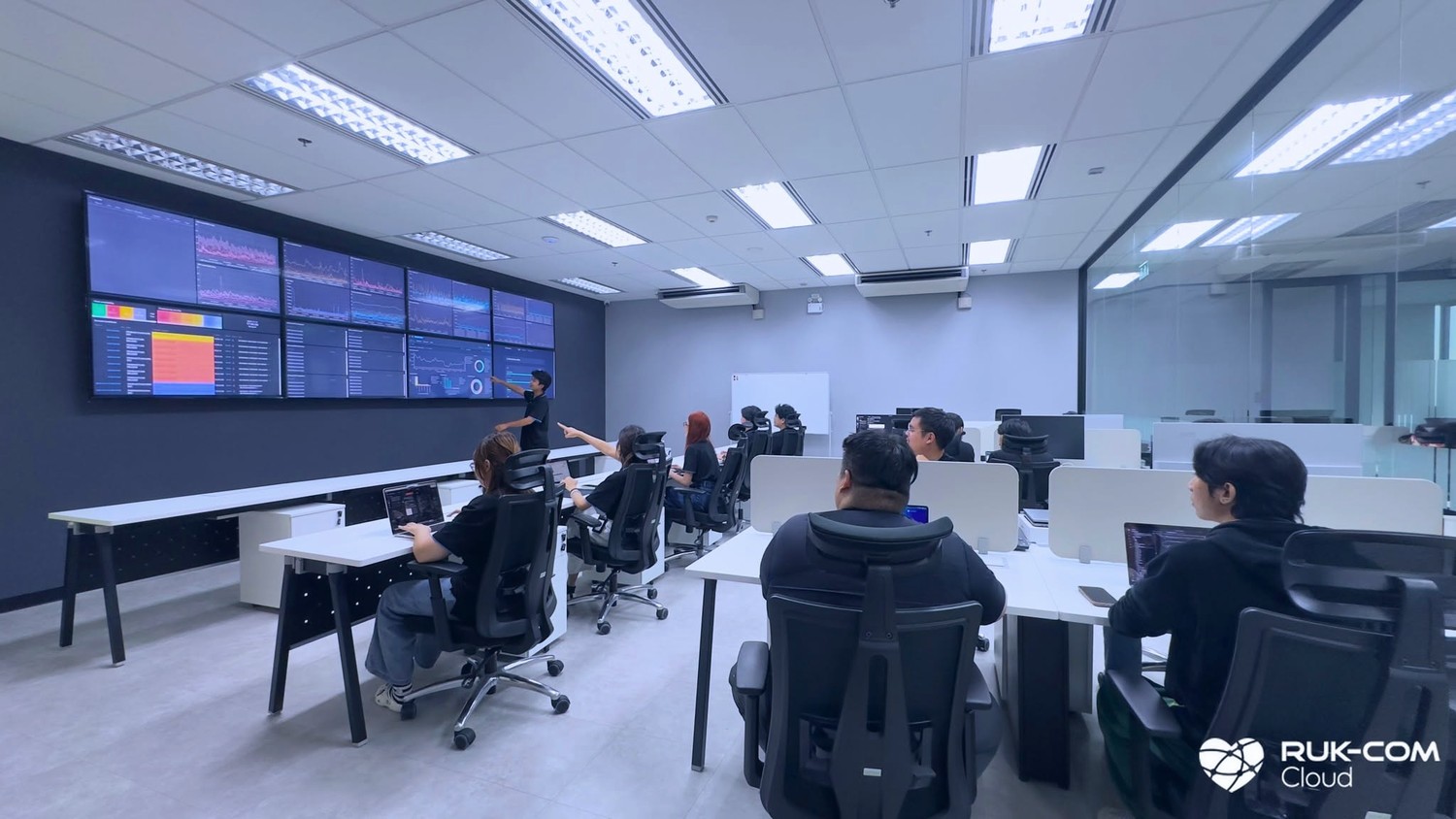
Connect logs, endpoint, cloud and identity sources within scope.
Analysts check relevance, evidence completeness and business impact.
Coordinate owners, act within authority and verify results before closure.
Know critical systems, owners and logging gaps. No alert is not proof of safety.
Compare alerts with identity, time and approved work; check false positives.
Use tested playbooks with approvers, stop conditions and outcome checks.
Separate backups, test restore and dependencies, compare with RTO/RPO and fix root causes.
Recovery must be tested; it is not guaranteed to be complete or immediate. SOAR does not itself decrypt ransomware.
Agree co-managed or fully managed delivery, scope, SLA, contacts and escalation channels.
Define approvers, permitted actions, emergency authority and feasible recovery or rollback.
Agree purpose, access, PDPA data roles, coverage hours and service review cadence.
Pricing, response times, integrations and authority are confirmed in the proposal and contract. This is not a package that automatically includes every tool.
Tell us about your systems, security concerns and current team so we can discuss an appropriate service scope and starting point.
A continuous presentation in Thai. Animated events are simulations, not live data.
Open presentation in a new tab ↗